Shop Voice
How to Book Jobs After Hours Without Hiring Anyone
September 14, 2026 · Next Level Marketing Team
You do not need a night shift to capture night business. You need a way for a customer at 9pm to finish the job of becoming a customer, without you touching anything until morning. That is the whole idea. Most shops treat after hours as dead time, so the calls roll to a voicemail nobody checks until 8am and the web form sends an email into a folder that nobody opens. The customer moves on because they are not waiting on you, they are shopping. The fix is not more staff. It is making sure the after hours path actually ends somewhere, either on your calendar or in a queue you can work first thing.
Key takeaways
- After hours leads leak because the path dead ends, not because customers do not want to book.
- Turning on the booking link you already pay for is the cheapest fix, and it costs nothing per call.
- An AI receptionist can help with real call volume, but only with hard rules against guessing prices or slots.
- A live answering service is strong at intake and weaker at booking unless you write the rules yourself.
- Judge the whole system on one morning queue: is it full most nights, and empty by 9am.
Why do after hours leads leak in the first place?
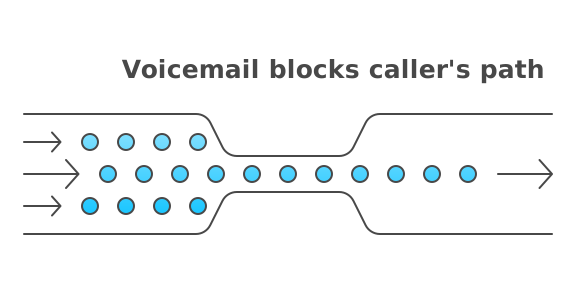
Because the path dead ends. Think about what a customer hits at 7:30pm: a voicemail greeting recorded years ago, a contact form with nine required fields, a hours Monday to Friday 8 to 5 line on Google, and no obvious next step. Every one of those is a stop sign.
The second reason is that after hours callers are often the most urgent ones. The car will not start and they need it towed tonight. The drain is backing up. The rash got worse. Urgency does not wait for your business hours, and urgent people call the next name on the list fast.
The third reason is quieter. Even non urgent after hours people, the ones who finally sat down on the couch to deal with the thing they have been putting off, are in a rare buying mood. If you catch them in that mood, they book. If you make them call back tomorrow at 10am from their desk, most of them will not.
What is the cheapest fix I can do this week?
Start with online booking, because it costs you nothing per call and it runs while you sleep.
If you already use scheduling software, most modern shop management, clinic and salon systems have a customer facing booking link built in and a lot of owners have never turned it on. Find it, turn it on, and put the link in three places: the button on your Google Business Profile, the top of your website, and the link in your Instagram bio. That one afternoon of work turns your existing software into a night shift.
Then fix the two things that leak the most. Your voicemail greeting: replace it with something that gives the caller a next step tonight, something like you have reached us after hours, leave a message and we will call you back first thing, or book online right now at our website, and say the web address slowly, twice. Your web form: cut it to name, phone, and what they need, since every extra field is a place to quit, then add one line under the button that says what happens next and when.
None of that requires a hire. It requires an hour and a decision.
Is an AI receptionist worth it, or is that just hype right now?
Right now there is a wave of AI receptionist pitches hitting local business owners. Scroll any small business group and you will see the same promise: answers 24/7, handles FAQs, books appointments, transfers when needed. Some of those tools genuinely work. The category is also crowded with new vendors, and results vary a lot depending on how well the thing is set up for your specific business.
Here is the honest read. An AI phone agent is a reasonable fit if you get real after hours call volume, your jobs are fairly standard, and you have the patience to train it on your actual services, pricing rules and what it must never promise. It is a bad fit if every job needs a judgment call, if you have not written down how you quote things, or if you are going to set it and never listen to the recordings.
The failure mode is not the AI being rude. It is the AI confidently telling a customer something you would never say, like a price or a same day slot you cannot honor. So if you try one, do these three things: listen to the first fifty calls yourself, give it a hard rule to hand off or take a message instead of guessing, and check that a real human callback happens the next morning. Treat it as a very fast note taker with a calendar, not as a replacement for judgment. This is a fast moving category and it is not settled, so start with a short commitment, not an annual contract.
What about a live answering service instead?
A traditional answering service uses real people, usually in a call center, to pick up when you do not. It is a mature option and it has been around a long time, which is its own kind of endorsement.
The tradeoff is the opposite of AI. You get a human who can read tone and handle a weird situation, but that human does not know your shop, your bays, or which technician does alignments. Most answering services are strongest at intake, meaning they take the message, gather the details you told them to gather, and route emergencies to your cell. They are weaker at actually booking, unless you give them access to your calendar and write the rules carefully.
Either way, the deciding factor is the same: who is going to write down your intake script and your booking rules. That work is the actual product. The vendor is just the delivery mechanism.
How do I know if any of this is working?
Do not judge it on feel. Judge it on a morning queue.
Pick one place where after hours leads land, just one, whether that is your booking calendar, a text thread, a shared inbox, or a note in your management system. Then make it somebody's first job of the day to clear that queue before the first car goes on the lift. If your after hours setup is working, that queue has things in it every morning and it is empty by 9am.
Three checks worth doing yourself, not delegating. Call your own main number at 8pm from a number nobody recognizes and listen to what a stranger hears. Fill out your own web form at 10pm on a phone, not a laptop, and time how long it takes and see if you get a confirmation. Look at your booking link on your Google Business Profile, click it on mobile, and make sure it goes somewhere that works. Most owners find at least one thing broken in those three tests, and fixing it is free.
What does this look like when it is running right?
Customer calls at 8:40pm. They hear a greeting that sounds like a real business and gives them two options: leave a message or book online. If you are running an AI agent, it answers, asks what they need, checks if it is an emergency, and either puts them on the calendar or takes a clean message with a promise of a morning callback.
Either path, the result lands in one place. The next morning, before the shop gets loud, someone works that list top to bottom. Nobody worked a night shift. Nobody got paid overtime. The phone just stopped being a dead end at 5pm.
That is the whole outcome. It is not glamorous and it is not a funnel. It is a customer at 9pm who was able to finish what they started.
Frequently asked questions
Do I need an AI receptionist to book jobs after hours?
No. The cheapest and most reliable starting point is turning on online booking in the scheduling software you already pay for, then putting that link on your Google Business Profile, your website and your social bios. An AI phone agent is worth considering after that, mainly if you get meaningful after hours call volume and your services are standardized enough to describe in writing.
What should my after hours voicemail greeting say?
It should do three things: confirm the caller reached the right business, give them a way to act tonight, usually a booking link said slowly and twice, and set a clear expectation for the callback, such as first thing tomorrow morning. Avoid greetings that only list your hours, because that tells the caller to go find someone else.
Is an AI phone answering service reliable enough for a service business?
It depends heavily on setup, and the category is moving quickly enough that it is not settled. The main risk is not rudeness, it is the system confidently promising a price or an appointment slot you cannot honor. If you try one, give it a hard rule to take a message rather than guess, listen to the early calls yourself, and start with a short commitment instead of a long contract.
AI receptionist or live answering service, which is better?
Neither is universally better. A live service gives you human judgment for unusual calls but the agents do not know your business in detail, so they are best at intake and message taking. An AI agent is faster and cheaper per call and can book directly into a calendar, but only if you have written down your services, rules and limits clearly. The written intake and booking rules matter more than the choice of vendor.
How do I measure whether after hours capture is working?
Create one landing spot for every after hours lead, whether that is a calendar, a shared inbox or a text queue, and make clearing it the first task of the morning. If the queue has items in it most mornings and it is empty before the first job starts, the system is working. Also test it yourself: call your own number at night from an unknown phone and fill out your own form on a mobile device.
Will offering after hours booking commit me to after hours work?
No, as long as your booking tool only shows the slots you actually want to fill. Online booking captures the customer at night and places them into a business hours appointment. The customer books when it is convenient for them and you work when it is convenient for you.